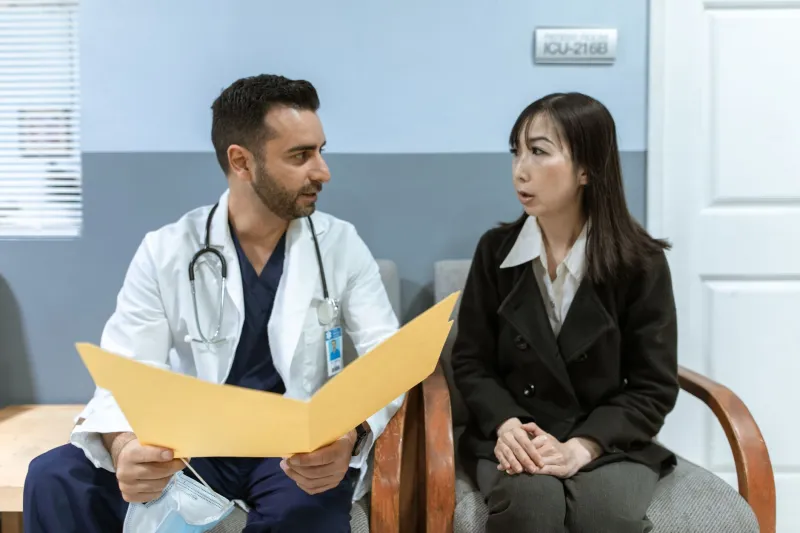
You Have the Right to Ask: Overcoming the Barriers That Stop Patients From Seeking a Second Opinion

Receiving a significant medical diagnosis can feel like the ground shifting beneath you. In those early moments, many patients experience a powerful and often conflicting set of impulses: trust the physician, follow the plan, move quickly—and yet, somewhere quieter, a voice that asks, Is this right? For a majority of patients, that quieter voice never gets the chance to be heard.
According to a 2017 study published in the Journal of Evaluation in Clinical Practice, diagnostic errors affect approximately 12 million Americans annually in outpatient settings alone. A separate analysis from the Mayo Clinic found that as many as 88 percent of patients who sought a second opinion at a major medical center left with a new or refined diagnosis. These are not marginal statistics. They represent a significant and largely preventable gap between the care patients receive and the care they deserve.
So why do so many people never ask?
The Emotional Weight of Doubting Your Doctor
For many patients, the reluctance to seek a second opinion is not primarily logistical—it is deeply emotional. There is a long-standing cultural expectation in American healthcare that the physician is the ultimate authority, and questioning that authority can feel like an act of ingratitude or even hostility.
"Patients often tell me they felt guilty even thinking about getting another opinion," says one internal medicine physician who has practiced at a major academic medical center for over two decades. "They worry the doctor will be offended, that they'll be labeled a difficult patient, or that they'll damage a relationship they may need to rely on."
This phenomenon—sometimes called medical deference—is reinforced by power dynamics that are embedded in the structure of clinical encounters. Patients frequently spend years developing trust with a primary care provider, and challenging that provider's judgment can feel like a personal betrayal. For patients from communities historically underserved by the medical system, the calculus is even more complex: many have had to fight simply to be taken seriously, and rocking the boat can feel like a risk they cannot afford.
The psychological pressure is real, but it is also worth naming for what it is: a barrier to accurate diagnosis and appropriate treatment.
What the Data Actually Shows About Diagnostic Accuracy
It is important to understand that seeking a second opinion is not an indictment of any individual physician. Medicine is genuinely complex, and the process of reaching a diagnosis involves clinical judgment calls that can vary meaningfully between practitioners—particularly in specialties such as oncology, neurology, rheumatology, and rare disease medicine.
Research consistently demonstrates that second opinions lead to meaningful changes in diagnosis or treatment plan at rates that should give every patient pause. A 2019 study in the American Journal of Clinical Pathology found that among cancer patients who sought a second pathology review, approximately 43 percent received a change in diagnosis that affected their treatment. These were not minor clarifications. They were clinically significant revisions.
None of this suggests that physicians are careless. It reflects the reality that medicine involves interpretation, and interpretation benefits from more than one set of eyes.
Systemic Obstacles: Insurance, Access, and Time
Beyond the emotional dimension, patients face real structural challenges when attempting to pursue a second opinion. Insurance coverage for second-opinion consultations varies widely. Some plans explicitly cover them; others require pre-authorization or limit the provider network in ways that make accessing a different specialist difficult or expensive.
Geographic access compounds the problem. Patients in rural areas may have limited options for specialist consultations, and traveling to a major academic medical center or cancer center can involve costs—transportation, lodging, time away from work—that are simply prohibitive for many families.
Telemedicine has begun to change this landscape in meaningful ways. Several major institutions now offer remote second-opinion programs that allow patients to submit records and imaging for review by specialists without leaving their home state. Organizations such as the National Cancer Institute's Cancer Centers Program can also help patients identify high-quality specialty resources within a reasonable distance.
A Practical Framework for Requesting a Second Opinion
If you are considering a second opinion, the following steps can help you pursue one effectively and without unnecessary friction.
1. Acknowledge that it is your right. Under the Patient Self-Determination Act and broader informed consent doctrine, patients in the United States have the legal and ethical right to seek additional medical input before consenting to any treatment. Most physicians not only accept this—they expect it for serious diagnoses.
2. Request your complete medical records first. Before scheduling a consultation elsewhere, obtain copies of your relevant records: lab results, imaging, pathology reports, and clinical notes. Under the 21st Century Cures Act, healthcare providers are generally required to provide patients with timely access to their records, often at no cost through patient portals.
3. Choose your second opinion provider deliberately. For serious conditions, consider seeking consultation at an academic medical center, a disease-specific center of excellence, or a specialist with documented expertise in your diagnosis. Your primary care physician can often assist with referrals, or you can search through professional society directories.
4. Be direct and professional when raising it. You do not need to apologize for seeking additional input. A straightforward statement—"I'd like to get a second opinion before we move forward with treatment"—is entirely appropriate. Most physicians will respond professionally and may even assist in coordinating the referral.
5. Document everything. Keep a written record of both opinions, including areas of agreement and divergence. If the two opinions conflict significantly, a third consultation may be warranted.
Reframing the Question
Seeking a second opinion is not a sign of distrust—it is a sign of engagement. Patients who actively participate in their diagnostic process, who ask questions and seek confirmation, tend to have better health outcomes and greater satisfaction with their care. The physician-patient relationship functions best not as a hierarchy but as a partnership, and partnerships are strengthened, not weakened, by honest inquiry.
At POMED Health, we believe that informed patients are better protected patients. If something does not feel right—if a diagnosis seems incomplete, if a treatment plan does not align with what you have read, if you simply need reassurance—you have every reason to ask. The second opinion you seek may confirm what you have already been told. Or it may change everything.
Either way, you deserve to know.